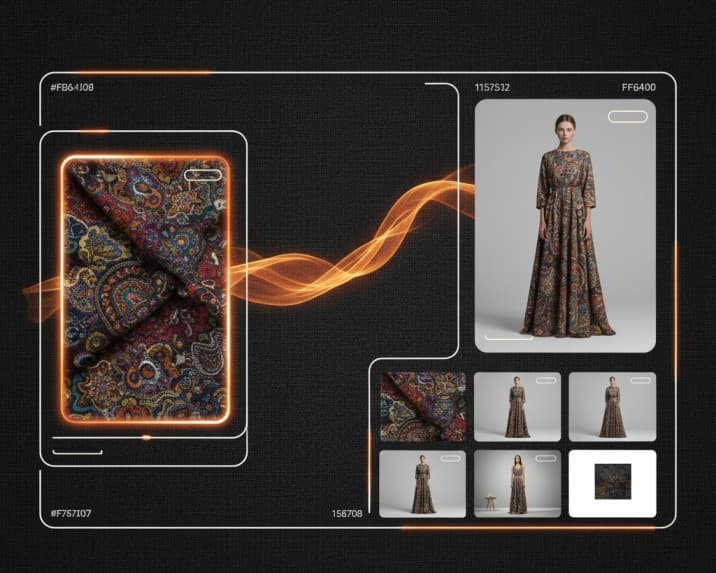
How Indian textile boutiques can sell faster with better visuals
If you run a textile boutique in India women ethnic, stitched/unstitched, premium fabrics, or a mixed collection you already know the biggest challenge isn’t getting designs. The real challenge is helping customers imagine the final outfit.
A fabric photo can look beautiful on a table. But customers don’t buy fabric photos. Customers buy a look a stitched kurti, a flowing dress, a classy co-ord set, a stylish shirt, or a festive ethnic outfit. And most customers will ask the same questions:
-
“Is fabric se dress/kurti achha lagega?”
-
“Print placement kaisa dikhega?”
-
“Neck design, sleeves, length ka idea milega?”
-
“Aap ke paas stitched sample hai?”
-
“Try karke dekh sakte?”
This is exactly where Fabric to Garment AI becomes useful not as a “tech feature,” but as a practical sales tool for boutique owners.
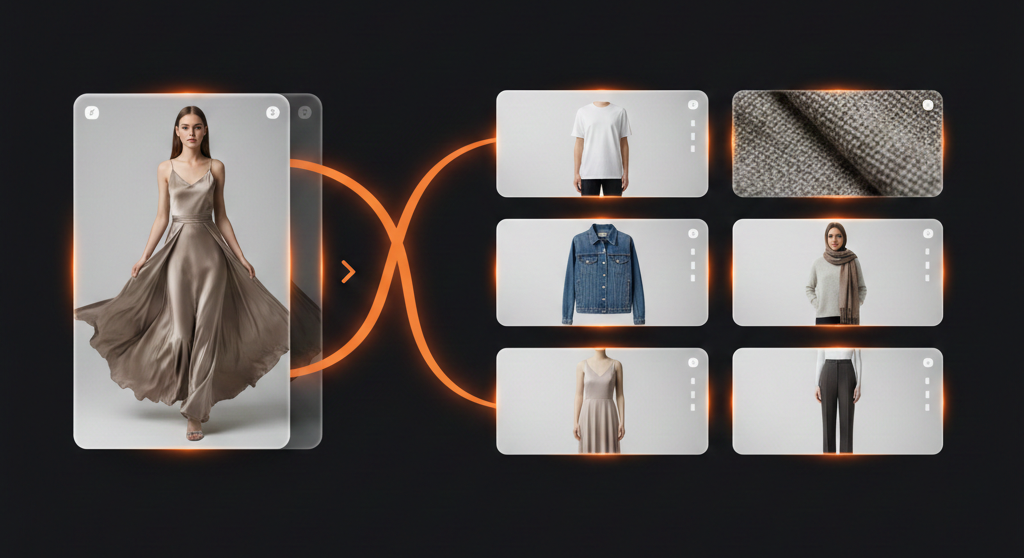
It converts your fabric photo into a realistic garment preview, so customers can see how the fabric may look after stitching quickly, consistently, and without needing a photoshoot or sample for every fabric.
And when you combine that with an AI catalog generator, you can also create clean, listing-ready images for ecommerce and marketplaces.
This blog explains how it works, how it fits into boutique workflows, and how you can use it to improve conversions online and offline.
Why boutiques lose sales without garment visualization
Boutique selling is emotional. Customers buy when they feel confident.
In offline stores, confidence comes from touching the fabric, checking fall, matching accessories, and trying something similar. But even in-store, many customers still need help imagining the stitched outcome.
In online selling (WhatsApp, Instagram, marketplaces), the gap becomes bigger. The customer can’t touch fabric and can’t easily imagine stitching.
So what happens?
-
customers ask for more photos
-
they delay the decision
-
they compare with someone who has better visuals
-
or they say “I’ll confirm later” and disappear
This delay is not always about pricing. Most of the time, it’s about uncertainty.
Fabric to Garment AI solves that by replacing “imagination” with “visual proof”.
What is Fabric to Garment AI?
Fabric to Garment AI is a system where you upload a fabric image (or garment fabric image) and generate realistic garment visuals like:
-
kurti previews
-
dress previews
-
blouse previews
-
shirt/top previews
-
ethnic set previews
The goal is simple: show the customer a stitched-like visualization before you stitch.
This helps in two big ways:
-
Decision speed: customer finalizes faster
-
Sales confidence: customer trusts the product more
For a boutique, that directly impacts conversion.
Why this matters for Indian boutique owners specifically
Boutiques in India operate with:
-
fast-changing stock (new fabrics arriving weekly)
-
limited space for stitched samples
-
limited budget for model shoots
-
strong WhatsApp + Instagram dependence
-
high demand for “new designs quickly”
A big brand can afford weekly shoots and full merchandising teams. A boutique needs a smarter way.
Fabric to Garment AI gives you that advantage:
-
You show more designs faster
-
You look more premium without extra cost
-
You create consistent visuals even with small teams
The boutique workflow: before vs after AI
Traditional workflow
-
You receive new fabric stock
-
You take fabric photos
-
Customers ask for stitched look
-
You either stitch sample (cost + time) or try to explain
-
Customer delays
-
Sale sometimes lost
AI-supported workflow
-
You receive new fabric stock
-
You take fabric photo (clean, clear)
-
Generate garment previews instantly
-
Share previews on WhatsApp/Instagram
-
Customer finalizes style + order faster
-
Stitch only after confirmation (efficient)
This shift saves your time and increases daily sales output.
The biggest benefits for textile boutiques
1) Sell more without stitching samples for everything
Most boutiques can’t stitch samples for every new fabric. It’s expensive and time-consuming.
With Fabric to Garment AI, you stitch fewer samples and still show more options.
2) Improve walk-in conversion
In-store customers often browse and hesitate. When you show a garment preview instantly, it becomes easier for them to say “yes”.
3) Make WhatsApp selling feel premium
WhatsApp is the real ecommerce for many boutiques. But most sellers send fabric pics only and the customer keeps asking “stitched photo hai?”
Garment previews make your WhatsApp catalog look like a brand catalog.
4) Daily Instagram content without daily shoots
Your store needs daily posts, especially during festive seasons. AI previews let you generate daily content even when stock changes quickly.
5) Faster custom orders and stitching confirmations
Customers who want custom stitching usually take time to finalize. Previews speed that up:
-
neckline confirmation
-
sleeve style confirmation
-
fit style confirmation
-
overall print placement feel
6) Reduce confusion and improve customer satisfaction
When a customer understands what they are buying, there are fewer misunderstandings later. That means fewer complaints and stronger word-of-mouth.
Where the AI Catalog Generator fits in
Fabric to garment previews help customers imagine stitching.
But once you start selling online seriously, you also need clean, consistent product listing images for your website, social ads, and marketplaces.
That’s where your AI catalog generator is the next step.
Why catalog images matter
A catalog set makes your product look:
-
clean
-
trustworthy
-
professional
-
“brand-like”
And it helps buyers compare quickly.
You can generate your catalog images here:
https://textile-ai.tameta.tech/catalogs
Use this link inside your blog exactly at the point where you explain “listing-ready photos for online selling”.
Practical use cases for boutique owners
Use case A: Women ethnic boutique (daily kurtis, festive sets)
You upload fabric → generate kurti/dress preview → share on WhatsApp → customer selects style → you stitch on order.
During festive seasons, you can create a mini “digital lookbook” daily without needing model shoots.
Use case B: Mixed boutique (men + women + kids)
You can keep the workflow same:
-
fabric preview for stitched visualization
-
catalog images for online listing
-
consistent brand look across categories
Use case C: Wholesale + resellers
If you supply resellers, they need sellable visuals. Give them catalog images + garment previews and they can sell faster meaning you get repeat wholesale orders.
How to get better results from your fabric photos
AI outputs are only as strong as your input.
To get the best garment previews:
-
Use bright natural light (window light is great)
-
Keep fabric flat and avoid heavy folds
-
Show the main pattern clearly
-
Avoid strong filters (they distort color)
-
Capture accurate color tones as much as possible
If you do this consistently, your output quality becomes consistent too making your brand visuals look professional.
Conversion tips: how boutiques can increase sales with AI visuals
Here are boutique-friendly conversion moves you can apply immediately.
1) Replace long chats with “instant visual proof”
Most WhatsApp chats become long because customers ask many questions. When you answer with visuals, chats become short and decisive.
Instead of:
“Fabric soft hai, print premium hai…”
Send:
-
1 garment preview
-
1 close-up fabric shot
-
1 catalog-style clean image
This reduces the back-and-forth.
2) Use a “3-image selling rule” on WhatsApp
For every product, send:
-
garment preview (stitched look)
-
fabric close-up (trust)
-
clean catalog image (professional)
This combination increases confidence.
3) Use consistent framing across posts
Even if your products change daily, your visuals should feel consistent. Consistency builds brand trust.
An AI catalog generator helps you maintain that consistency without manual editing.
4) Make your first image “scroll-stopping”
On Instagram and marketplaces, the first image decides clicks. Use the cleanest, most readable catalog output as your first image.
5) Reduce returns by showing “truth images”
Don’t over-edit colors. Include at least one close-up showing texture and print clarity.
The clearer the expectation, the fewer the issues after delivery.
6) Add simple product info with the visuals
Even the best visuals need short supporting copy:
-
fabric type
-
occasion
-
what’s included
-
wash care
-
size/length suggestion (if stitched)
Keep it short. Keep it consistent.
How to structure a “visual funnel” for your boutique
A boutique funnel is simple:
Discovery → Trust → Decision → Order
AI helps at every step:
-
Discovery: Instagram reels + posts with garment previews
-
Trust: close-ups + consistent catalog style
-
Decision: alternate preview styles (kurti vs dress)
-
Order: WhatsApp confirmation and payment
When you run this visually, your boutique becomes faster, more premium, and easier to scale.
Recommended internal link placement inside this blog
To make the blog SEO-strong and keep users inside your ecosystem, place internal links like this:
-
Early section (after you introduce “listing-ready photos”):
Link to Catalogs tool: https://textile-ai.tameta.tech/catalogs -
Mid section (when you mention “learn more workflows/tips”):
Link to Blog hub: https://textile-ai.tameta.tech/blog -
Later section (when you mention “industry updates AI + textiles”):
Link to News hub: https://textile-ai.tameta.tech/news
This structure supports both SEO and conversion.