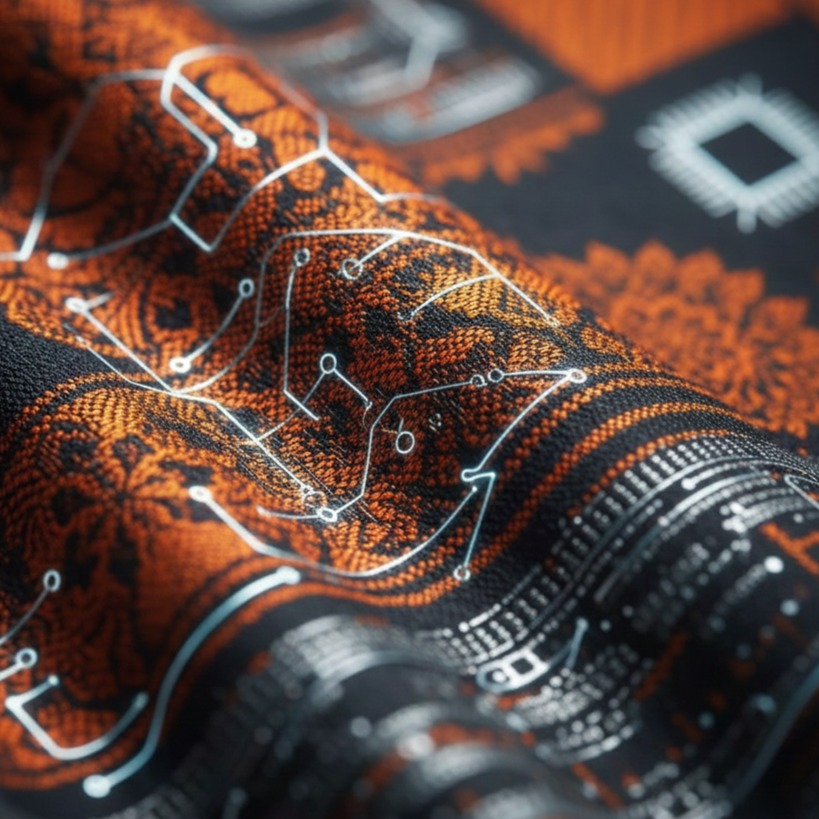
Explore how AI in textiles is revolutionizing the Indian textile industry by enhancing craftsmanship, comfort wear innovation, and sustainable textile technology.
Overview
The Indian textile industry, historically renowned for its intricate craftsmanship and rich heritage, is now embracing a new wave of innovation driven by artificial intelligence (AI). This fusion of traditional textile artistry with cutting-edge AI technology is not only enhancing everyday comfort wear but also accelerating sustainability and efficiency in textile manufacturing. As consumer preferences evolve and global competition intensifies, AI in textiles offers a timely pivot for Indian manufacturers and designers to maintain their edge in both domestic and international markets.
With AI's ability to automate design processes, optimize production, and personalize customer experiences, the future of textiles is increasingly digital. India's textile sector, valued at over $150 billion and employing more than 45 million people, stands to gain significantly through these technological interventions (Indian Ministry of Textiles). Meanwhile, global textile markets are witnessing a surge in AI adoption for sustainable textiles and smart textiles, further emphasizing the critical role of AI in textile innovation.
How AI Is Changing Textiles and Fashion
From Fabric Patterns to Finished Garments
AI has transformed traditional textile workflow stages, from fabric production to garment finishing. Digital textile printing powered by AI algorithms enables designers to create complex patterns and color schemes that were previously impossible or labor-intensive. Machine learning models can analyze consumer preferences and global fashion trends to generate innovative fabric designs tailored for comfort wear innovation and aesthetic appeal.
In manufacturing, AI-powered robotics and advanced automation streamline cutting and stitching, reducing fabric waste and improving production speed. Smart textile technologies, such as fabrics embedded with sensors or adaptive properties, are now feasible because AI facilitates their design and integration. The capabilities of AI in textiles extend to quality control, where computer vision systems detect defects in fabrics faster and more accurately than human inspectors.
Impact on Indian Boutiques and Global Brands
Indian boutiques and fashion houses benefit from AI fashion design tools that democratize high-level design processes. By using AI-powered design assistants, small-scale brands can produce collections that resonate globally, complementing India's reputation for exquisite craftsmanship. Similarly, established exporters and D2C brands leverage AI for personalized customer experiences, virtual try-on solutions, and predictive inventory management.
Global brands partnering with Indian mills are increasingly adopting AI manufacturing textiles to ensure consistency and meet stringent quality standards. The fusion of AI with traditional weaving and embroidery techniques is enabling hybrid products that appeal to both heritage and modernity-focused consumers, reinforcing India’s position in the global textile supply chain.
Real-World Use Cases
-
AI-Driven Digital Textile Printing
A leading Indian textile firm integrated AI-powered digital printing technology that uses machine learning to optimize ink use and color accuracy. This resulted in a 30% reduction in printing waste and the ability to produce rapid prototyping samples for comfort wear collections, boosting both sustainability and speed to market.
-
Virtual Try-On Solutions in Fashion Ecommerce
A popular D2C apparel startup in India implemented an AI-based virtual try-on feature on its website, improving customer engagement and reducing return rates. The AI models analyze body shapes and fabric drape to provide realistic previews, enhancing the overall shopping experience.
-
Smart Textiles for Performance Wear
Textile manufacturers in India have collaborated with tech companies to develop smart textiles that monitor body temperature and humidity, ideal for sports and comfort wear. AI plays a crucial role in optimizing sensor placement and data accuracy embedded within the fabric.
-
Predictive Demand Forecasting in Textile Mills
Export-oriented textile mills deploy AI systems to predict order volumes and optimize production schedules. By analyzing past demand patterns alongside market signals, AI helps mills reduce overproduction, minimizing waste and enhancing profitability.
Industry Insights and Expert View
“Integrating AI into traditional textile craftsmanship is not about replacing the artisan but enhancing their capabilities to innovate faster and deliver customized comfort to consumers. This technology can ensure that Indian textiles stay competitive globally while preserving our rich heritage,” says Raghav Sharma, Founder and CEO of WeaveTech Innovations, a leading textile technology startup in India.
Sharma’s perspective underscores the synergy between manual skill and digital intelligence. This collaboration fosters textile innovation by enabling designers and manufacturers to experiment with new materials, sustainable practices, and customized fashion solutions. By bridging craftsmanship with AI, Indian textiles can shape the future of comfort wear and sustainability at scale.
Market Data and Growth Potential
The Indian textile industry contributes around 2% to the country’s GDP and accounts for 13% of industrial production. According to IBEF’s Indian textile industry overview, the sector is expected to reach $223 billion by 2025, buoyed by advancements in textile technology India, including AI-driven systems. These technologies are critical for meeting demands for sustainable textiles India initiatives, reducing environmental impact and enhancing global competitiveness.
Globally, the AI in textiles and fashion market is projected to grow at a compound annual growth rate (CAGR) of approximately 35% from 2021 to 2028, reaching $1.5 billion by 2028, as reported by McKinsey’s State of Fashion report. This rapid growth reflects widespread adoption of AI in fashion ecommerce, smart textiles, and AI manufacturing textiles, which are redefining production and consumption patterns worldwide.
How Tools Like Textile AI Platforms Help
Innovative platforms such as Tameta Textile AI are becoming the digital backbone of modern textile businesses. These textile AI platforms help Indian mills, powerloom clusters, boutiques, and export houses bring artificial intelligence into their daily work without needing a big in-house tech team. From fabric pattern generation to garment mockups and product listing support, they create one connected workflow instead of many scattered tools.
A strong textile AI platform provides end-to-end solutions across the value chain – fabric design, sampling, garment visualization, content creation, and even support for ecommerce images. For example, the dedicated can instantly apply a fabric photo to multiple garment styles like kurtis, shirts, sarees, dresses, and co-ord sets. This saves days of manual photoshoots, reduces sample wastage, and helps brands test more designs before production. Faster approval cycles and lower sample costs directly improve margins and cash flow.
These platforms also make advanced data and image processing easy to use for non-technical users. Merchandisers and designers can upload a fabric swatch and, within minutes, generate 4K garment visuals for WhatsApp, Instagram, catalogues, and online marketplaces. This is especially powerful for Indian boutiques and D2C brands that want to compete with bigger labels but have limited budgets for models, photographers, and studio shoots. With AI, they can show more fabric variants, colorways, and size options without expanding their physical inventory first.
On the manufacturing side, textile AI platforms help mills and job workers understand which designs and color combinations are performing better in the market. Because visuals can be generated quickly, teams can run small experiments, share AI-generated lookbooks with buyers, and adjust their production pipeline based on real feedback. Over time, this supports smarter demand forecasting, better loom planning, and more sustainable use of yarn, dyes, and fabric.
Another important benefit is how these platforms protect and modernize traditional Indian designs. By combining AI pattern tools with digital textile printing, textile AI platforms can bring regional weaves and prints – like Ajrakh, Bandhani, Ikat, and Kalamkari – into new silhouettes and global-ready collections. Designers can remix heritage motifs into contemporary streetwear, workwear, and resort wear while keeping the original identity intact. This creates new income opportunities for artisans, design studios, and export houses working with Indian crafts.
Knowledge and training are also a big part of how these tools help the ecosystem grow. Resources like the guide users on how to get better AI results, write stronger prompts, choose the right garment base, and plan collections using AI visuals. Step-by-step articles and case studies make it easier for small business owners, boutique founders, and marketing teams to learn at their own pace and turn AI experiments into real business outcomes.
Overall, textile AI platforms act as a bridge between traditional textile knowledge and modern digital workflows. They reduce lead time, cut sampling costs, increase design variety, and support both Indian and global customers who now expect fast, visual-first shopping experiences. For any textile or fashion business that wants to grow in today’s online-led market, adopting a reliable textile AI platform is no longer a luxury – it is quickly becoming a basic competitive need.
Challenges and Responsible Use of AI
While AI in textiles offers remarkable opportunities, several challenges must be managed responsibly. The skill gap in understanding and operating complex AI systems remains a hurdle for many traditional artisans and small manufacturers. Additionally, data quality and privacy concerns can impact the accuracy and ethical use of AI in textile innovation.
There is also a risk of over-reliance on automation, potentially sidelining the human creativity quintessential to Indian textile craftsmanship. Balancing AI's efficiency with cultural authenticity is vital. Furthermore, environmental concerns necessitate that AI-driven textile processes prioritize sustainability, reducing carbon footprints and waste throughout the supply chain.
Action Steps for Readers
- Explore AI textile platforms like Tameta Textile AI to understand how AI can integrate with your current processes.
- Invest in training and skill development for your workforce to effectively use AI tools in textile design and manufacturing.
- Adopt AI-enabled digital textile printing to reduce waste and accelerate design-to-market timelines.
- Leverage AI fashion design tools to create customized comfort wear that meets evolving consumer preferences.
- Collaborate with AI experts and tech startups to pilot smart textiles and sustainable textiles India projects.
Conclusion
AI in textiles is transforming the Indian textile industry by marrying age-old craftsmanship with modern technology to create innovative, sustainable, and comfortable textile products. From digital textile printing and AI fashion design to smart textiles and AI manufacturing textiles, the future of textiles is digital and data-driven. Indian textile manufacturers, designers, and exporters are well-positioned to harness these advances to remain competitive globally while preserving their unique heritage. As the industry embraces these innovations, platforms like Tameta Textile AI play a pivotal role in accelerating textile innovation and enhancing everyday comfort through AI.