If you’re a fabric manufacturer, trader, or textile wholesaler, you already know the real cost doesn’t start at stitching it starts before the first cut.
One fabric lot can look “sure-shot” in a roll photo, but once it becomes a garment, the story changes:
-
the motif scale feels too big on a kurti
-
the border doesn’t land where it should
-
the print looks premium in a saree but “flat” in a gown
-
the color reads different when the full silhouette is visible
That’s where waste begins: wrong sampling, wrong category selection, slow approvals, and stock that doesn’t move.
On the other side, e-commerce sellers (Meesho, Amazon, D2C, Instagram) face a different version of the same problem: customers don’t buy fabric — they buy what they can understand in one glance. If your product listing images aren’t clear and consistent, you lose clicks and trust even if the fabric is excellent.
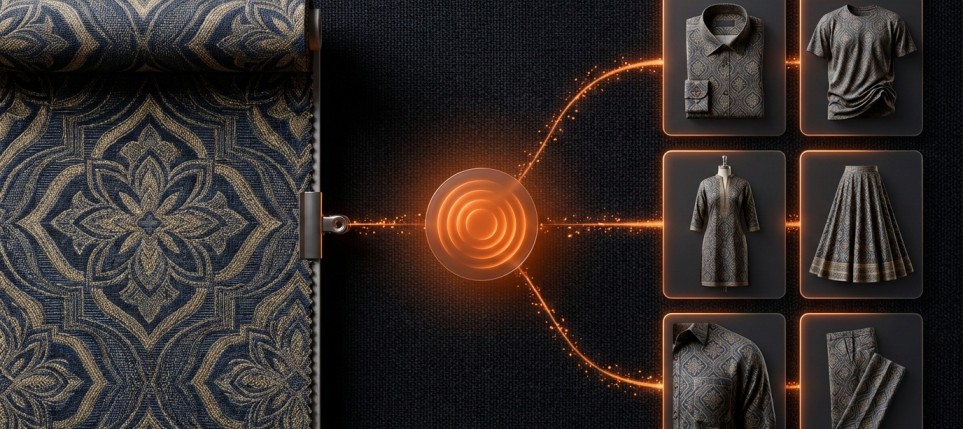
This is why fabric to garment AI is becoming the most practical upgrade for both worlds: manufacturing and selling.
Tameta’s Fabric to Garment AI Packages are built to answer a simple question that every buyer asks in their own language:
“Aa fabric garment ma kevũ dekhāvnū che?”
(How will this fabric look when it becomes a garment?)
And then we go one step further — we generate outputs that are also usable as Meesho listing images and Amazon product listing images, with a clean studio look that fits marketplace expectations.
The shared problem: visualization gap
Whether you’re a manufacturer or a seller, the pain is the same:
Manufacturers lose money because…
-
Sampling takes time and fabric.
-
Approvals take multiple back-and-forth rounds.
-
Wrong style decisions create dead stock and cutting waste.
Digital sampling / virtual prototyping is widely discussed as a way to reduce physical samples and material waste in fashion development. SAGE Journals+2MedCrave Online+2
Sellers lose money because…
-
Customers decide based on product listing images, not fabric quality in your mind.
-
Marketplaces reward clean visuals and reject messy ones.
-
Your SKU velocity depends on how fast you can list and test.
So the solution is the same: make fabric instantly understandable as a garment — and make it look listing-ready.
What is “garment preview from fabric”?
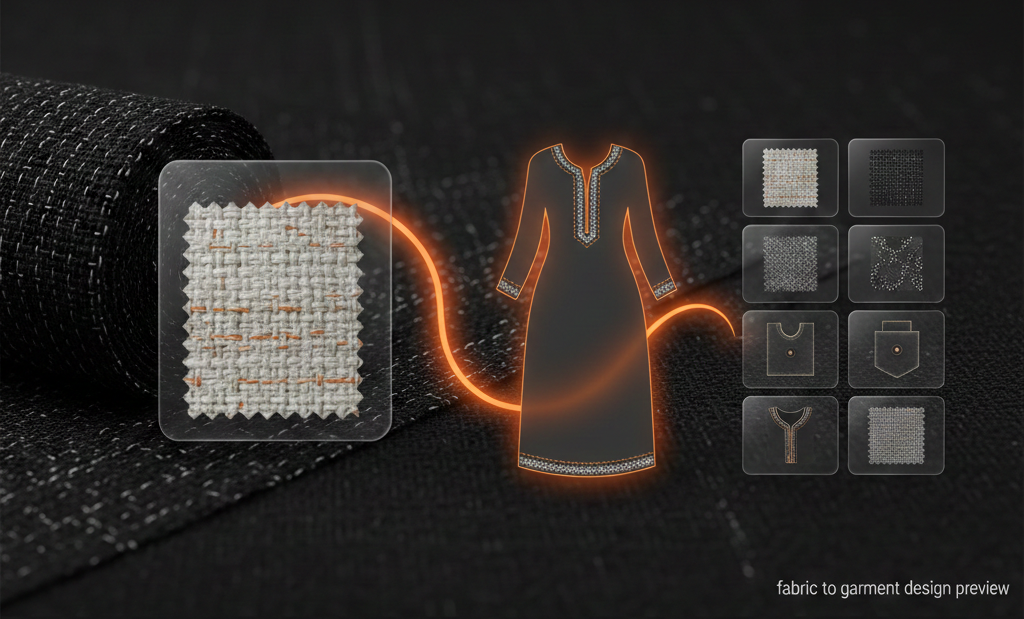
A garment preview from fabric is a realistic visualization where your real fabric image is mapped onto a garment silhouette (kurti, saree, lehenga, shirt, hoodie, etc.) so you can judge:
-
print scale and spacing on the full garment area
-
whether it suits festive, bridal, dailywear, officewear, men’s ethnic, export basics
-
whether borders/panels look balanced
-
if it will match buyer taste before you cut anything
This is the “pre-production clarity” that reduces waste — because you stop guessing.
The story: how a fabric manufacturer reduces waste with Fabric to Garment AI
Let’s take a common scenario.
You have a new festive fabric lot maybe it’s a rich print, good color depth, and the roll photo looks premium. You plan to cut samples as:
-
anarkali
-
lehenga choli
-
blouse set
-
maybe kaftan or suit
But you don’t really know which one will sell best until you spend time and material.
Old workflow (waste-heavy)
-
Cut sample fabric
-
Stitch sample
-
Quick photos
-
Send to buyer
-
Buyer says “Try different style / border / silhouette”
-
Repeat
Every repeat cycle costs fabric, labor, courier time, and delays.
New workflow (waste-reducing)
-
Upload fabric once
-
Select a package (example: Women’s Festive Assortment Pack)
-
Generate multiple garment previews
-
Share previews for approval
-
Cut only what’s approved
This is how digital sampling is discussed as reducing physical prototyping and material waste in fashion development. SAGE Journals+2MedCrave Online+2
In plain terms: you’re not cutting fabric to discover the truth. You’re discovering the truth first — then cutting.
What Tameta “Packages” change (the real advantage)
A lot of AI tools generate one image at a time. That’s useful, but manufacturers and sellers need speed and consistency.
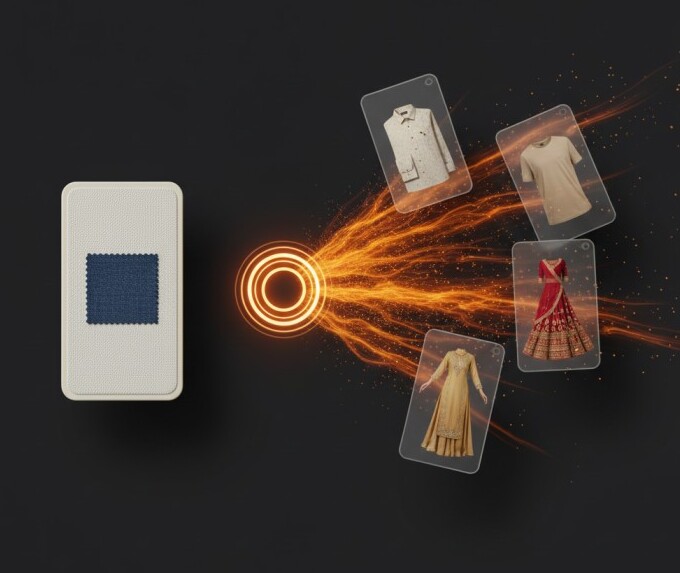
Tameta Packages are different: one fabric → a set of best-seller directions.
This matters because fabric doesn’t have one destiny. The same fabric might be:
-
perfect for a saree
-
okay for a kurti
-
weak for a gown
-
excellent for blouse panels
Packages help you identify the best use quickly.
Package examples (built for real market demand)
Below are practical “why these packs exist” explanations you can put directly in your product story.
1) Women’s Festive Assortment Pack
Includes: Anarkali, Lehenga Choli, Blouses, Kaftan
Use it when: you want to sell festive fast and avoid wrong style sampling
What you learn quickly:
-
Is this fabric better as lehenga (large area) or anarkali (vertical silhouette)?
-
Will blouse placement look premium or messy?
-
Does kaftan drape make the print look bigger than it is?
2) Signature Occasion Pack
Includes: Saree, Gown, Suit, Dress
Use it when: you’re targeting party/occasion buyers, boutiques, premium reels
What you learn quickly:
-
Saree uses border and pallu storytelling; gown needs all-over harmony
-
Suit needs balanced panel placement and neckline harmony
3) Men’s Complete Wardrobe Pack
Includes: Shirt, T-Shirt, Kurta, Sherwani
Use it when: you want to test a fabric across western + ethnic
What you learn quickly:
-
A print can look modern on a shirt but too noisy on sherwani
-
Kurta can be the best “middle ground” for many prints
4) Export Basics Pack
Includes: Tee, Polo, Shirt, Denim, Jacket
Use it when: you sell bulk basics or export categories
What you learn quickly:
-
Does the fabric read “export clean” or “local busy”?
-
Which silhouettes look most commercial?
How this improves textile buyer approvals (fast)
A buyer approval is usually delayed because the buyer can’t visualize. They ask:
-
“Stitch karke dikhao.”
-
“Model pe kaisa lagega?”
-
“Border placement?”
-
“Front-back view?”
With fabric to garment AI, approvals become simpler:
-
show 4–6 package outputs
-
buyer picks the winning silhouettes
-
you move into cutting with confidence
That’s what “textile buyer approvals” should feel like: fast, clear, low-confusion.
The seller side: why product listing images decide your growth
For Meesho/Amazon sellers, your listing image is your shopkeeper.
Meesho: what the platform encourages
Meesho’s Supplier resources repeatedly emphasize uploading clear images, and the Supplier Panel includes tools like Images Bulk Upload for creating image links for listings. Meesho Supplier+2Meesho Supplier+2
On Meesho “sell online” pages (for categories like accessories/home decor/beauty), they explicitly mention images should be JPEG and without logos/watermarks, and recommend clear front images. Meesho Supplier+2Meesho Supplier+2
This is exactly why sellers look for a Meesho product image generator workflow: consistent, clean images at scale.
Amazon: official image requirements are strict
Amazon Seller Central publishes image requirements such as:
-
pure white background for main images (often required by category/marketplace)
-
minimum pixel requirements for zoom (example: 1001 px on longest side in some guidance) Amazon Seller Central+1
Amazon also provides technical guidance on acceptable formats and image quality. Amazon Seller Central+1
This is why sellers need AI product photography for clothing: not “artistic” — but clean and compliant-looking.
How Tameta helps Meesho/Amazon sellers (real, practical use)
1) Listing speed: upload more SKUs in less time
When images are ready faster, you can:
-
test more designs
-
list seasonal variations
-
find winners earlier
2) Consistency: your store looks professional
A consistent image style increases trust. Mixed quality reduces it.
3) Better understanding = fewer “confusion clicks”
When your product listing images show the garment clearly, customers spend less energy guessing.
4) Marketplace-friendly output mindset
Even if you later retouch or resize, the base is already aligned with what marketplaces encourage:
-
clean background
-
clear garment focus
-
minimal distractions Meesho Supplier+2Amazon Seller Central+2
The “Digital Textile Catalog” advantage (manufacturers + sellers)
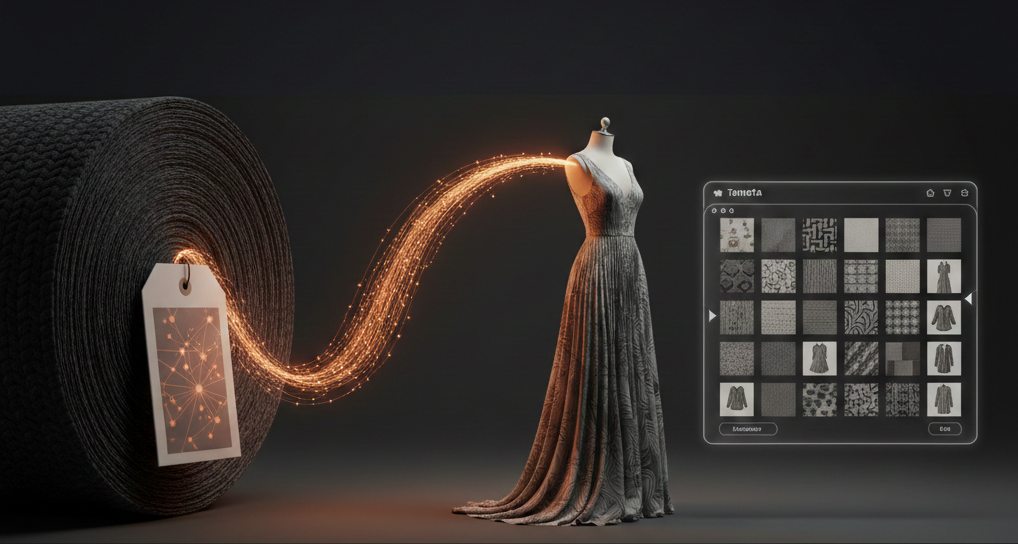
A digital textile catalog should not be 300 fabric thumbnails with no clarity. It should be:
-
fabric photo
-
best use (garment previews)
-
variation set (festive, daily, men, export, bridal)
-
shareable approval pages
That’s why Tameta becomes a textile catalog generator — because it generates the visuals that make a catalog actually sell.
This also supports faster decision-making and fewer physical samples, which is one of the commonly cited benefits of moving to digital sampling and virtual prototyping. SAGE Journals+2MedCrave Online+2
Step-by-step workflow (easy for everyone)
For fabric manufacturers / wholesalers
-
Upload fabric image
-
Select the package that matches your buyer intent
-
Generate 4–8 garment previews
-
Share previews for approval
-
Cut only approved designs
For Meesho/Amazon/D2C sellers
-
Upload fabric (or fabric-based design)
-
Choose the best-selling pack (festive/daily/officewear/men/export)
-
Generate clean studio-style outputs
-
Use outputs as product listing images
-
Scale your listing pipeline