AI Revolutionizing Indian Textile Craftsmanship for Smarter Living
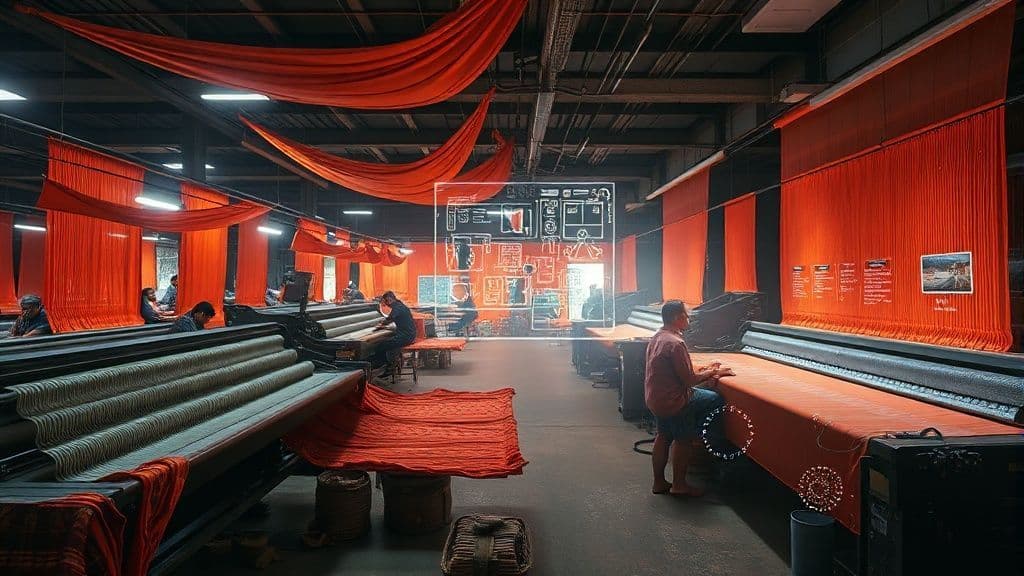
The integration of AI in textiles is transforming the Indian textile industry, merging traditional craftsmanship with cutting-edge technology. This new wave is propelling smart textiles, digital weaving, and sustainable textile innovations that cater to smart living technology. As India embraces AI textile design and textile manufacturing AI, the age-old practice of Indian handicrafts is evolving for a future driven by textile technology and innovation.
Key Highlights
- AI-driven digital weaving and design are enhancing precision and creativity in Indian handicrafts.
- Smart textiles incorporating AI are enabling smart living technologies like wearable health monitors and adaptive fabrics.
- Sustainable textiles are gaining momentum through AI optimizing resource use and reducing waste in manufacturing.
- The Indian textile industry is rapidly adopting AI to compete on a global scale and meet future demands.
Why This Matters
The Indian textile industry has been a backbone of the economy, employing millions and showcasing the rich heritage of Indian handicrafts globally. However, competition from mechanized production and international players has put pressure on traditional methods. AI in textiles offers a solution by modernizing production without losing cultural essence. Smart textiles, for example, combine technology with fashion, opening new markets for Indian products abroad. Meanwhile, AI-assisted textile manufacturing reduces operational inefficiencies, making Indian textile firms more competitive. This matters not only for sustaining livelihoods but also for preserving and evolving a critical part of India's cultural identity through textile innovation.
Industry Reaction
Experts from the sector see AI as the future of the Indian textile industry. Mr. Rahul Mehra, Head of Innovation at a leading textile firm in Mumbai, said, "AI in fashion and textile manufacturing is a game-changer for India. It empowers artisans while optimizing production processes, helping the industry stay sustainable and competitive globally. Our integration of AI tools in digital weaving and smart textile design has already started improving turnaround times and enhancing product quality."
Future Impact
According to the Ministry of Textiles, India’s textile market is projected to reach $223 billion by 2025, growing at a CAGR of 11% from 2021. With the accelerating adoption of AI and smart technologies, this growth could be even more robust. The future of textiles depends heavily on implementing AI textile design and manufacturing, enabling the creation of smart textiles that appeal to global consumers seeking both tradition and innovation. For detailed insights and technical developments, you can explore resources at textile-ai.tameta.tech. This integration of technology will likely redefine the global positioning of the Indian textile industry in the years to come.
What Readers Can Do
- Support brands and products that use sustainable textiles and incorporate AI-driven innovation to promote the future of textiles.
- Learn about smart textiles and textile technology trends to understand how traditional crafts are transforming for smarter living technology.
- Encourage local textile artisans by appreciating and promoting the blend of Indian handicrafts with modern AI textile design.